
Rockford Basement Flooding
Consecutive storm rounds dumping 2 to 5 inches of rain fully saturate ground levels across the Stateline area, escalating flash flood risks. When groundwater pushes through foundation seams, our crews deploy industrial pumps to extract water and dry structural framing fast. Contact our dispatch team right away to schedule immediate water removal.
When it's safe to go back in, call (815) 555-0153.
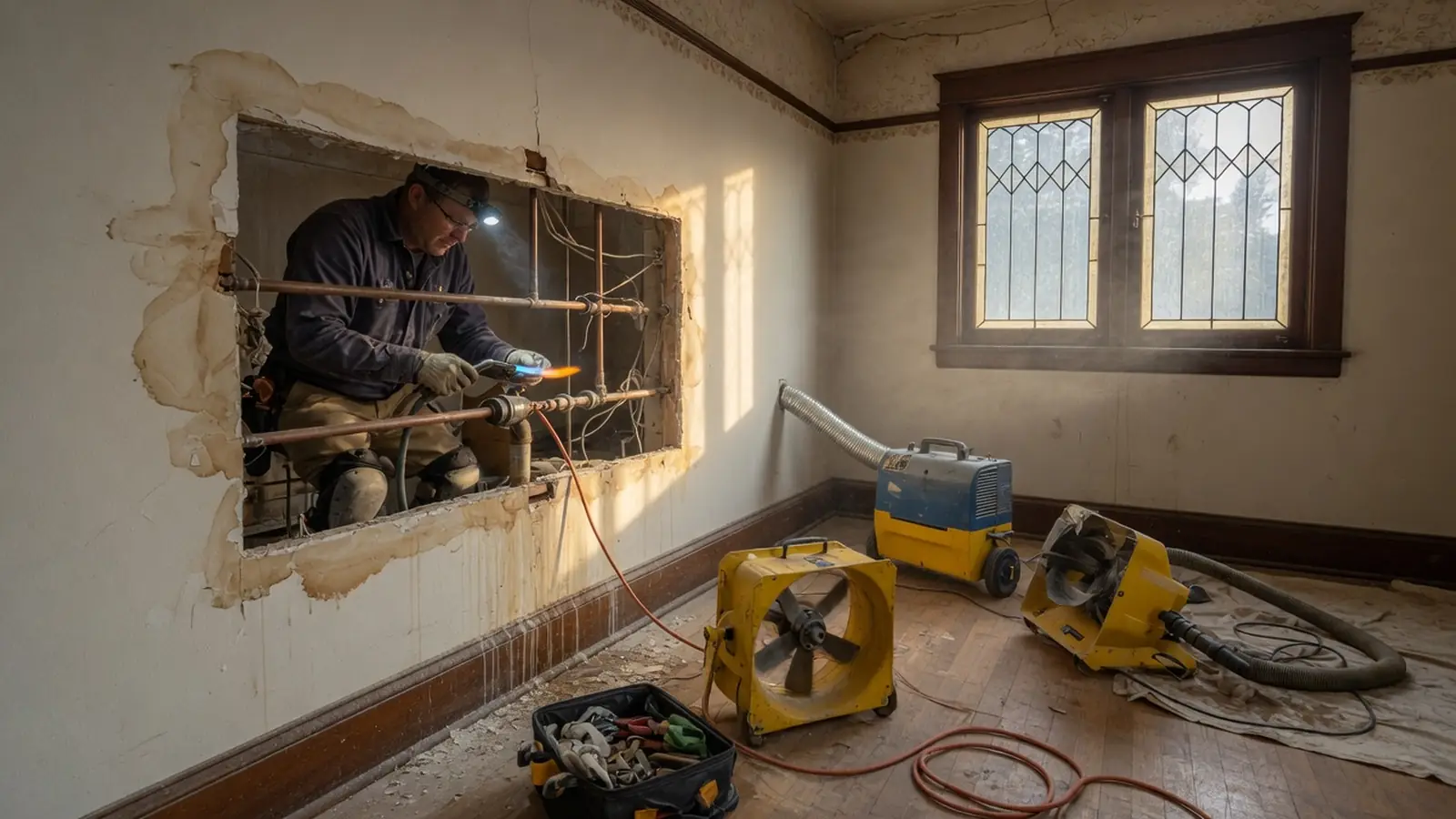
Reliable Flood Extraction And Basement Drying
Rapid spring snowmelt combined with saturated soils in the Rock River valley drives intense hydrostatic pressure that forces groundwater through hairline foundation cracks and floor joints.
A pattern echoed in public discussions is how quickly an overlooked seepage issue can overwhelm finished basements and destroy furnishings.
When unexpected inundation threatens your property, our comprehensive water damage restoration protocols ensure your subfloors and framing dry thoroughly.
Our field technicians deploy high-volume extraction units alongside commercial dehumidifiers to stop structural deterioration.
We thoroughly inspect perimeter footings and subfloor cavities to identify hidden moisture pockets before sealing your space.
Our Four-Step Flood Restoration Plan
Homeowners often describe debating whether to rent commercial dryers and demo drywall themselves or hire professionals, but handling structural water mitigation requires calibrated thermal cameras and industrial desiccant equipment.
- Emergency Water Pumping. Sump pumps frequently fail due to power loss during major storms, leaving basements vulnerable to rapid flooding. Our crew arrives immediately with truck-mounted vacuum extractors and submersible pumps to clear deep pooling from your floor.
- Moisture Mapping And Source Isolation. Using calibrated pinless moisture meters and infrared thermography, our technicians map the migration of moisture through slabs and subfloors. If winter chill caused structural supply lines to burst, we isolate and repair burst frozen pipes before beginning moisture extraction.
- Flood Cuts And Decontamination. Municipal drain backsurges containing sewage are classified as Category 3 black water, requiring the removal of porous carpet pads and drywall rather than simple surface drying. Technicians make clean flood cuts above the moisture line to dispose of contaminated materials and treat framing with EPA-registered antimicrobial agents.
- Controlled Structural Drying. Commercial low-grain refrigerant dehumidifiers and axial air movers run continuously to draw moisture from wall studs and concrete footings. We track relative humidity and ambient temperature daily until structural materials meet equilibrium moisture targets.
Our Structural Drying Standard
Every water mitigation project adheres strictly to IICRC S500 guidelines for professional water damage remediation. To safeguard indoor air quality, our certified structural mold remediation techniques eliminate microbial spores behind baseboards. We verify moisture readings across all structural members before clearing equipment from your property.
Sump Pump Overflow Response
Severe thunderstorm lines frequently knock out grid power just as torrential rain peaks, making secondary battery-backup sump pumps critical to prevent sudden basin overflow. We install auxiliary battery systems and inspect discharge lines to maintain continuous pit drainage.
Structural Cavity Drying
Trapped groundwater behind finished wall assemblies causes rapid deterioration of framing and sill plates. Technicians deploy high-static pressure air movers and industrial desiccant dehumidifiers to dry deep structural cavities.
Sewage Cleanup And Sanitation
Backsurges from municipal drains carry hazardous biological pathogens directly across basement slabs. Our team extracts waste, safely removes unsalvageable porous elements, and applies broad-spectrum EPA sanitizers.
Dedicated Moisture Extraction And Mitigation Standards
Our water mitigation technicians approach every flooded basement with systematic moisture mapping, rapid extraction protocols, and continuous psychrometric monitoring. Property owners receive transparent documentation, structural moisture logs, and disciplined drying procedures on every response.
- 12Zip Codes Served
- 7Service Areas
- 3Services Offered
Local property owners share their firsthand experiences with our emergency flood cleanup and basement water extraction services.
“Navigating local inspection requirements after our drain backed up was completely painless. The crew handled the mandatory code filings and backflow documentation without delay. Our basement passed the final municipal review on the very first visit.”
Marcus T.
“Waking up to standing water at two on Sunday morning felt like a nightmare. The team answered our emergency call right away and had extraction gear running in our utility room within forty minutes. Their rapid response saved our water heater and finished storage area from complete ruin.”
Elena V.
“Every flood cut they made along the baseboards was perfectly straight and level. The crew took exceptional care around our bottom wall plates, leaving clean seams that made drywall reconstruction seamless. You cannot even tell where the water damage occurred now that everything is sealed.”
Derek K.
“Passing their contact details to my next-door neighbor was an easy choice after seeing their thorough drying process. They treated our home with tremendous respect and dried every floor joist down to baseline moisture readings. My neighbor ended up calling them when his pit overflowed during the next storm.”
Rachel P.
Frequently Asked Questions
How quickly should standing floodwater be extracted from a basement?
Standing floodwater must be extracted within 24 to 48 hours to halt microbial growth and prevent permanent structural damage to subfloors. Lingering water penetrates foundation seams and finished wall framing, dramatically increasing restoration expenses and secondary mold hazards.
Does groundwater intrusion repair require city building permits?
Surface water extraction does not require permits, but structural foundation alterations and major electrical repairs demand local municipal permits. Restoration contractors manage necessary municipal filings when structural modifications, framing replacements, or circuit breaker repairs become necessary.
Why must carpet pad and drywall be replaced after sewer backups?
Contaminated Category 3 black water saturates porous materials, requiring removal because surface drying cannot eliminate dangerous pathogens. Sewage backups introduce harmful biological contaminants that stay embedded inside porous pad foam and gypsum board despite surface sanitization attempts.
Can wet drywall and insulation be dried in place without cutting?
Wet fiberglass insulation and degraded wallboard lose structural integrity and must be removed to prevent hidden mold colonies from multiplying. Trapped moisture behind baseboards cannot evaporate quickly enough with ambient airflow, requiring precision flood cuts above the water line.
How long does professional structural drying usually take in flooded basements?
Complete structural drying typically takes three to five days depending on humidity levels, water penetration depth, and affected material density. Daily psychrometric measurements track moisture reduction in concrete slabs and structural framing until equilibrium moisture content is achieved.