
Rockford Mold Remediation
When water intrusion triggers microbial colonies behind drywall and baseboards, prompt negative air containment protects your indoor environment. Our remediation specialists isolate affected areas, remove damp materials, and eliminate hidden structural dampness with commercial drying gear. We restore healthy air and moisture-stable framing to your property with certified precision.
For a Rockford inspection, call (815) 555-0153.
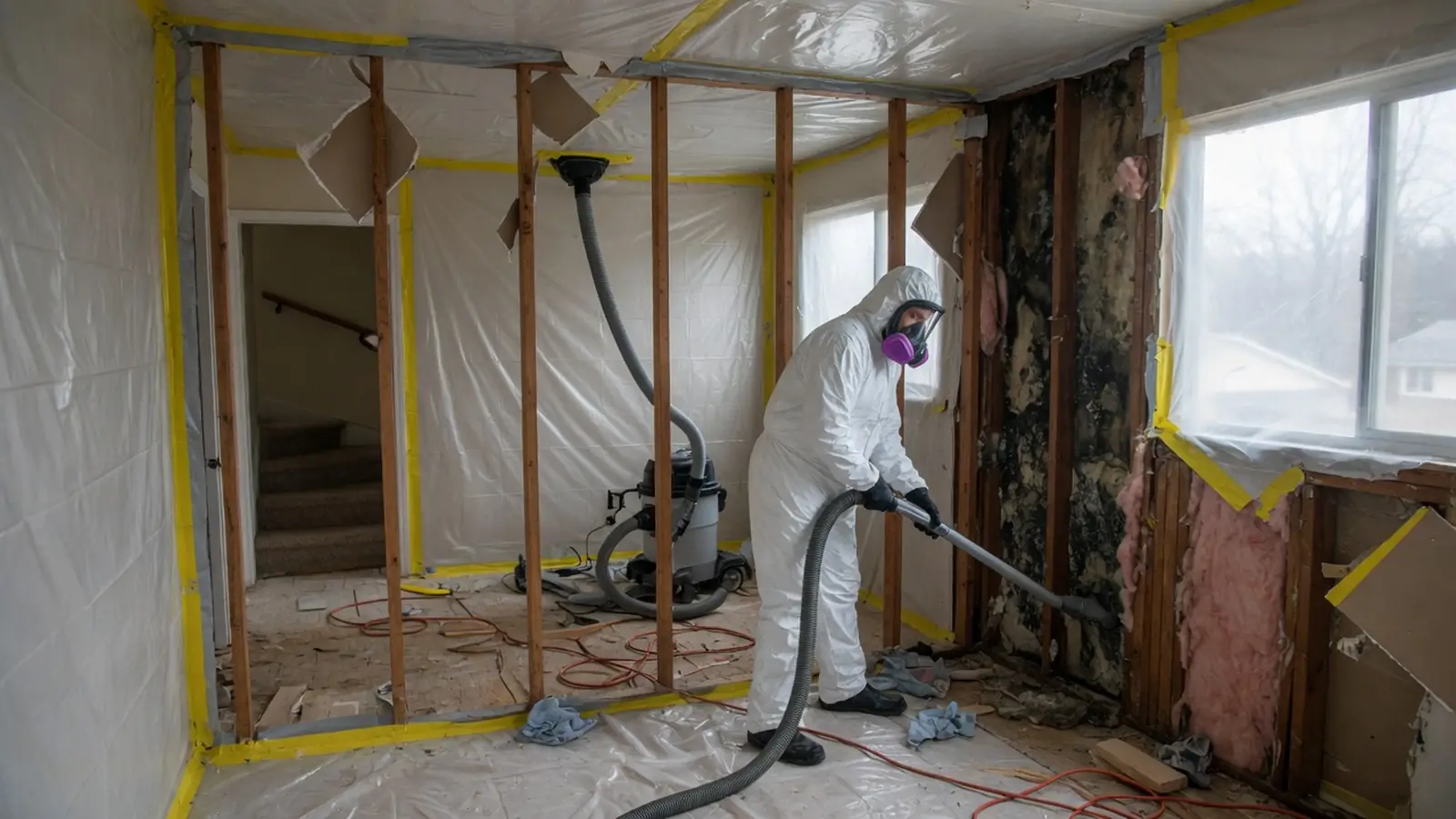
Dedicated Remediation Specialists
The median owner-occupied home locally was built in 1962 (Census ACS 5-year), making vintage wall cavities and older plumbing especially susceptible to concealed moisture.
About 7% of housing units across our local service territory (4,569 of 67,890) were built since 2000, so a substantial share of the local stock is still on its original systems.
With 67,890 housing units on record in the Census ACS 5-year estimates across the area, routine pipe seepage and seasonal condensation frequently trigger hidden fungal growth behind baseboards.
When unseen moisture compromises indoor air quality, our complete water damage restoration protocols eliminate fungal colonies at the source.
Technicians isolate affected zones under negative air pressure using HEPA air scrubbers to prevent disturbed fungal spores from migrating into unaffected living areas during demolition.
Active microbial growth can colonize wet drywall, baseboards, and subflooring within 24 to 48 hours of water intrusion if indoor relative humidity remains above 60 percent.
A pattern echoed in public discussions is discovering widespread mold colony growth on framing studs while cutting away waterlogged drywall following a basement flood.
Every mitigation project concludes with detailed moisture meter logging to verify structural materials are thoroughly dry before sealing wall cavities.
Our Step-by-Step Remediation Process
A pattern echoed in public discussions is discovering mold colony growth on framing studs while cutting away waterlogged drywall after flooding. If your property suffered heavy water intrusion, our rapid basement flooding cleanup process extracts standing water before spores take hold. We follow strict containment protocols to safeguard your indoor living environment.
- Containment & Negative Air Setup. Technicians isolate affected zones under negative air pressure using HEPA air scrubbers to prevent disturbed fungal spores from migrating into unaffected living areas during demolition. Protective poly barriers seal doorways while air scrubbers continuously exhaust filtered air outside.
- Moisture Mapping & Selective Demolition. Restoration professionals verify drying using thermal imaging and calibrated moisture meters rather than surface appearance. Because active microbial growth can colonize wet drywall, baseboards, and subflooring within 24 to 48 hours of water intrusion if indoor relative humidity remains above 60 percent, compromised porous finishes are carefully excised.
- Antimicrobial Treatment & HEPA Vacuuming. All exposed structural timbers are wire-brushed and cleaned using commercial HEPA vacuums to capture embedded particulate. Technicians apply EPA-registered antimicrobial wash solutions to sanitize surfaces and eliminate fungal root structures entrenched deep within wood pores.
- Structural Verification & Clearance. Drying and antimicrobial remediation must be fully completed and verified before structural restoration and rebuilding can safely start. We conduct extensive electronic moisture verification and visual clearance inspections to ensure every stud and joist has reached normal equilibrium.
Our Clinical Containment Guarantee
Homeowners often describe how a storm-related power outage stopped their sump pump from running, causing several inches of water to flood the basement floor and ignite mold growth. Whenever sub-zero winter temperatures trigger hidden line fractures, learn how we mitigate burst frozen pipes to prevent moisture from saturating perimeter walls. Drying and antimicrobial remediation must be fully completed and verified before structural restoration and rebuilding can safely start, ensuring your structure remains completely sanitized and moisture-stable.
Negative Air Containment
Technicians isolate affected zones under negative air pressure using HEPA air scrubbers to prevent disturbed fungal spores from migrating into unaffected living areas during demolition. Continuous commercial air filtration traps microscopic particulates throughout the cleanup.
Porous Material Removal
Active microbial growth can colonize wet drywall, baseboards, and subflooring within 24 to 48 hours of water intrusion if indoor relative humidity remains above 60 percent. We safely bag and discard saturated gypsum and insulation to prevent ongoing cross-contamination.
Deep Antimicrobial Timber Sanitization
We treat structural framing studs with professional-grade antimicrobial agents to eradicate hidden fungal hyphae. Drying and antimicrobial remediation must be fully completed and verified before structural restoration and rebuilding can safely start.
Our Commitment To Certified Remediation
Every structural drying and containment protocol follows established IICRC standards to guarantee thorough hygiene and lasting protection for your property.
- 12Zip Codes Served
- 7Service Areas
- 3Services Offered
Real feedback from property owners who trusted our crews to eliminate hidden microbial growth, isolate airborne contaminants, and dry structural framing back to safe baseline levels.
“Daily moisture readings and photo logs arrived on my phone every single afternoon without me ever asking. The crew kept us completely informed about spore containment levels and what remained on the work schedule. It felt reassuring to know exactly what was happening behind the containment plastic.”
Nathan B.
“Instead of tearing out all the structural wall studs, the lead specialist explained why sanding and applying an antimicrobial sealant was structurally sound and far more cost-effective. The team walked us through every option clearly so we did not waste money replacing clean framing lumber. Their practical advice saved us thousands on unnecessary reconstruction.”
Chloe M.
“Severe freezing rain temporarily delayed their equipment transport on the second morning of our remediation project. The crew quickly adjusted by extending their afternoon hours and setting additional commercial dehumidification units to keep our drying schedule on track. They finished the job on time despite the difficult winter weather.”
Julian R.
“Our next door neighbor was nervous about outside air exhaust tubes running near their shared property line. The technicians took time to walk over, explain how HEPA filtration captures fine particulates, and re-routed the ducting to give them complete peace of mind. Navigating that situation with such courtesy kept everyone on good terms.”
Hannah S.
Frequently Asked Questions
Can I kill subsurface mold on porous drywall using household chlorine bleach, or does the residual moisture actually accelerate regrowth behind the wall?
Bleach cannot penetrate porous drywall to kill subsurface hyphae, leaving water behind that actually accelerates fungal regrowth behind wall cavities. Chlorine remains strictly on the outer surface while the water component sinks into gypsum paper, feeding fungal roots. Professional remediation requires physical containment, controlled drywall excision, and structural drying.
How long does professional mold remediation take in a residential home?
Typical residential containment, antimicrobial cleaning, and thorough structural drying take between two and four days depending on moisture depth. Small bathroom or under-sink issues wrap up in 48 hours, while multi-room moisture intrusion demands continuous dehumidification and multi-stage air scrubbing before final clearance.
What does professional residential mold remediation typically cost?
Standard containment and removal costs range from fifteen hundred to five thousand dollars, influenced by the affected square footage and dampness. Local estimates depend on whether structural demolition is required, the level of personal protective equipment needed, and the duration of commercial drying equipment deployment.
Why must drying and remediation be verified before structural rebuilding begins?
Drying and antimicrobial remediation must be fully completed and verified before structural restoration and rebuilding can safely start. Rebuilding over damp wall framing traps residual moisture inside enclosed wall assemblies, triggering rapid fungal return and degrading new drywall materials.
How do technicians verify that structural framing is completely dry?
Restoration professionals verify drying using thermal imaging and calibrated moisture meters rather than surface appearance. Pin-style resistance meters measure moisture percentages deep inside timber studs, comparing them against dry standard equilibrium benchmarks before clearing the space.